















… As Urban Renewal Accelerates
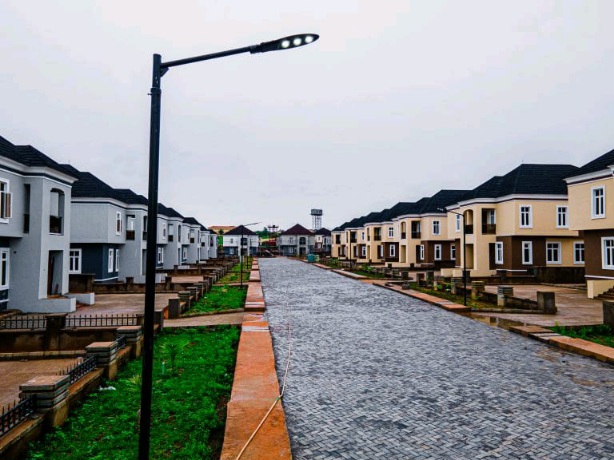
The Ogun State Government, under the leadership of Governor Dapo Abiodun, has reaffirmed its commitment to delivering 10,000 affordable housing units by 2027, marking a significant milestone in the state’s urban renewal and social welfare agenda.
Speaking at a recent progress assessment, the administration revealed that over 5,000 housing units have already been completed across the state’s three senatorial districts since 2019. This aggressive housing drive is a core pillar of the governor’s ISEYA agenda, aimed at providing dignified shelter, reducing the national housing deficit, and stimulating the local economy.
The state plans to deliver an additional 3,000 affordable housing units within the next year, backed by a substantial investment in the 2026 “Budget of Sustainable Legacy”.
The Ibara GRA Renewal Programme has already seen over 150 modern homes completed, transforming what was once a neglected area into a structured, high-value residential hub.
Homes that were initially sold for approximately ₦5 million to civil servants and the public now command market values exceeding ₦25 million, reflecting massive investor confidence and asset appreciation.
Ongoing developments include the Prince Court Estate (Sagamu Expressway), ISEYA Court (Oke-Mosan), and Havila Court (Ibara), alongside the construction of an International Conference Centre at Iperu.
A proposed Bureaucratic Estate on 5,000 plots is being developed in collaboration with the Head of Service to provide civil servants with affordable homes through mortgage-based arrangements.
“Our vision is to make Ogun State the preferred destination for living, working, and investing,” Governor Abiodun stated. “By focusing on quality and sustainability, we are not just building houses; we are building communities and restoring dignity to our urban spaces”.
The state government continues to leverage the Ogun State Housing Corporation and partnerships with the Federal Housing Authority (FHA) to ensure no community is left behind in this infrastructural transformation.