


















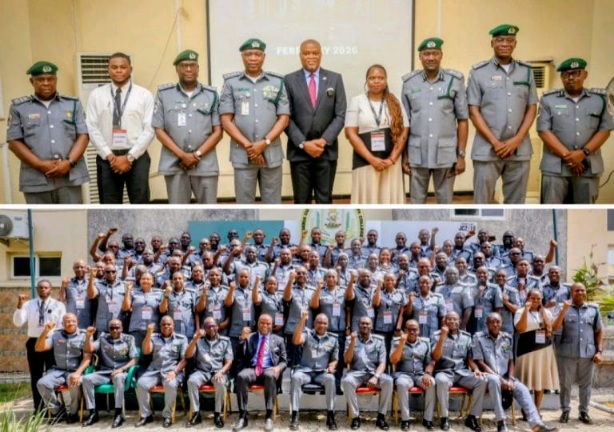
The Nigeria Customs Service (NCS) has officially launched a high-level strategic training program aimed at preparing its senior officers for elevated leadership roles and the complexities of modern border management.
In alignment with the NCS Policy Thrust of Consolidation, Innovation, and Collaboration, the Comptroller-General of Customs (CGC), Adewale Adeniyi, MFR, emphasized that the initiative is designed to bridge the leadership gap and ensure a seamless transition within the Service’s top hierarchy.
Enhancing the strategic decision-making skills of Assistant Comptrollers-General (ACGs) and Comptrollers to meet international best practices in trade facilitation.
Identifying and nurturing high-potential senior officers to take on greater responsibilities within the Nigeria Customs Service management structure.
Preparing leaders to oversee the full implementation of the Nigeria Customs Integrated System (NICIS II) and other data-driven modernization projects.
Reinforcing the Service’s commitment to transparency, revenue generation, and national security through ethical leadership.
CGC’s Vision for a Professional Force
Speaking at the commencement of the workshop at the Nigeria Customs Command and Staff College (NCCSC), Gwagwalada, CGC Adeniyi stated, “The challenges of 21st-century customs administration require leaders who are not only technically proficient but also strategically agile. We are investing in our human capital to ensure that the NCS remains a pride of the nation and a pillar of the Nigerian economy.”
This professional development drive comes at a time when the NCS is recording unprecedented revenue milestones and intensifying its crackdown on economic saboteurs.
By elevating the leadership capacity of its senior cadre, the Service aims to foster a more motivated workforce and improve its response time to global trade dynamics.
The training modules, facilitated by renowned experts in public administration and security studies, cover areas such as Geopolitical Awareness, Crisis Management, and Collaborative Border Management.