
















The Nigerian Senate witnessed a heated session as deliberations regarding the amendment of the Electoral Act 2022 sparked intense national debate.
At the center of the controversy is the transition toward full electronic transmission of election results and whether the current legislative trajectory reflects a deliberate strategic maneuver or a breakdown in procedural clarity.
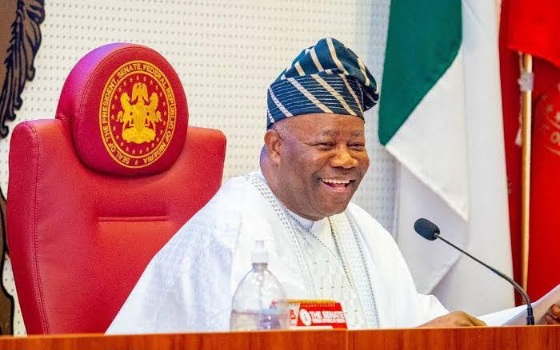
During the session presided over by Senate President Godswill Akpabio, lawmakers deliberated on critical clauses intended to mandate the Independent National Electoral Commission (INEC) to transmit results electronically from polling units directly to the central portal.
A Divided Chamber
The session was marked by sharp divisions between the ruling party and the opposition, raising two primary schools of thought among political analysts:
The “Outsmarted” Theory: Several political commentators suggest that opposition senators were “outmaneuvered” during the voice vote process.
Despite vocal support for mandatory electronic transmission to curb manual tampering, the final resolutions appeared to favor a more discretionary approach for INEC, leading to claims that the opposition failed to secure the necessary legislative safeguards.
The “Confused Leadership” Critique: Conversely, critics within the chamber pointed to the Senate President’s handling of the debate. Moments of heated back-and-forth led some lawmakers to suggest that the leadership’s interpretation of the proposed amendments was inconsistent, resulting in a “confusing” legislative environment that stalled clear progress on the Bill.
The push for the Electoral Act Amendment is driven by a public demand for increased transparency following the 2023 General Elections.
Whether INEC must or may use electronic means for result collation.
Assessing the readiness of national telecommunications to support real-time data transfer in rural areas.
Legal Clarity: Eliminating ambiguous wording that led to numerous litigations in the previous election cycle.
In response to the tension, the Office of the Senate President maintained that the proceedings were conducted in strict adherence to the Senate Standing Orders.
“The goal of the 10th Senate is to deliver an Electoral Act that is robust, practical, and reflects the will of the Nigerian people.
We are not interested in partisan games, but in legislative excellence that secures our democracy,” the statement read.
As the Bill moves to the committee stage for further refinement, the Nigerian public remains watchful.
The outcome of these amendments will fundamentally shape the integrity of the 2027 General Elections.